The "Adder" Teaches Digital Logic,
Alternate Bases, AND Cooperation
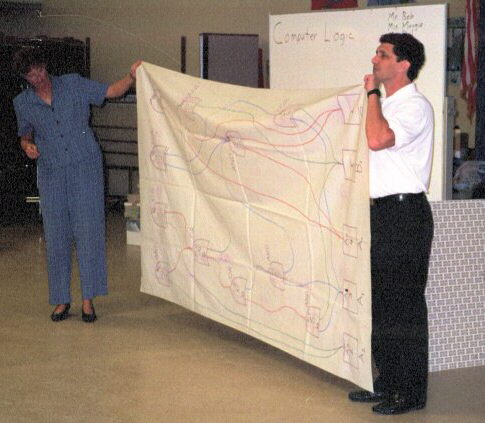
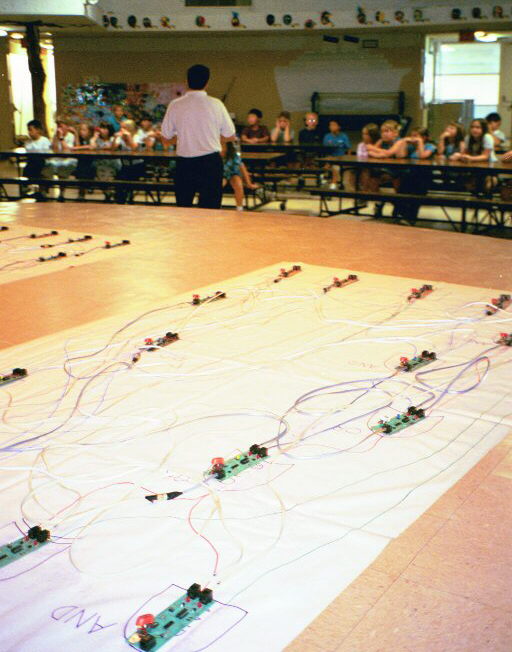
The Adder circuit uses EduGatesTM to Add Binary Numbers just like
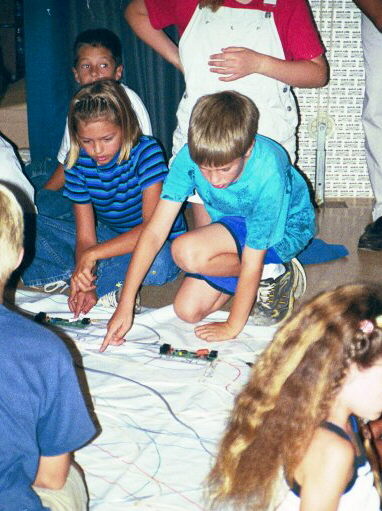
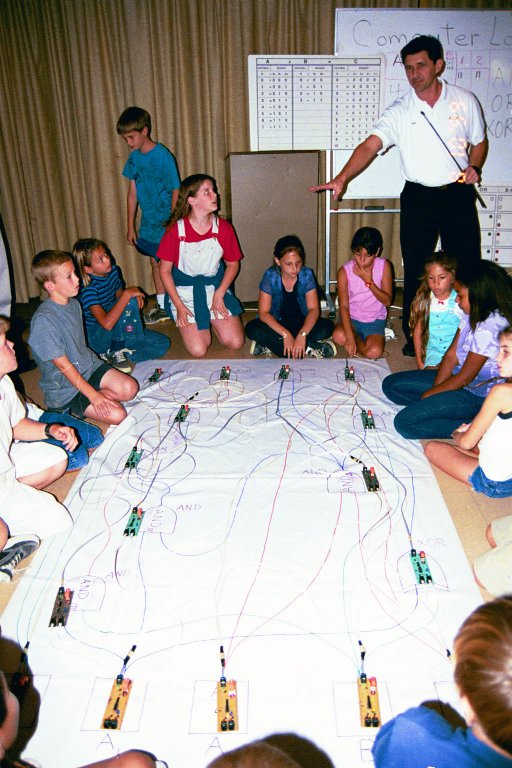
a real microprocessor! The adder circuit uses a life-size schematic
to guide the students in connecting their gates. Two teams run two
separate adders for a fun competition...
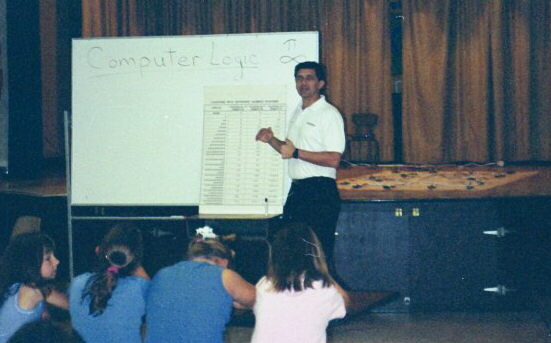
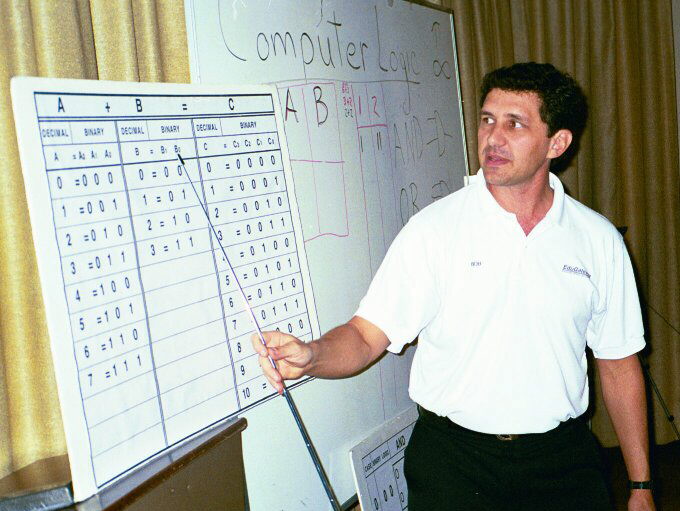
Before students can add Binary Numbers, they have to learn to count
using Binary Numbers. A table of human counting (10's), crab counting (4's),
and worm counting (2's) makes it clear and entertaining...
Each Adder problem starts with two numbers to add. These are set by
students on the "A" and "B" inputs...
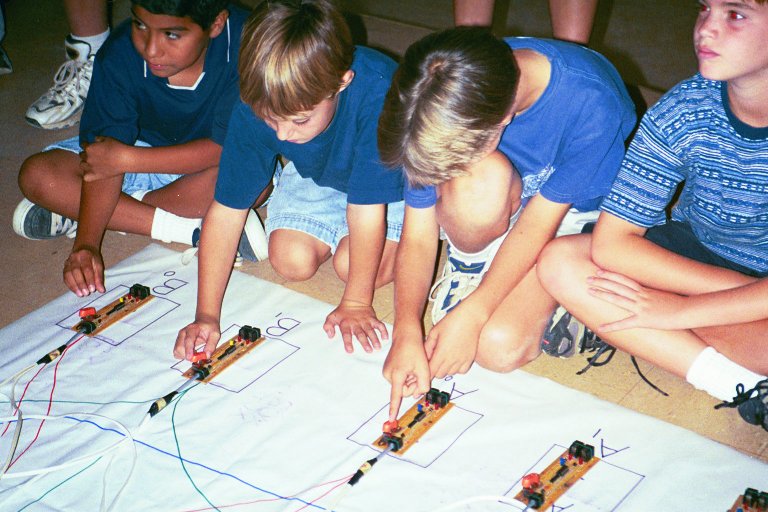
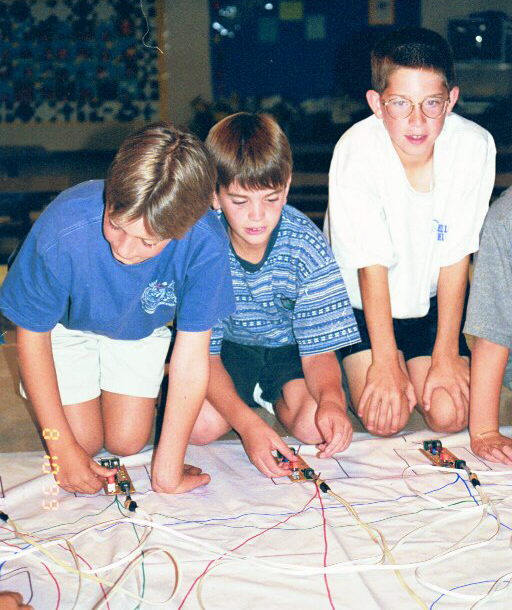
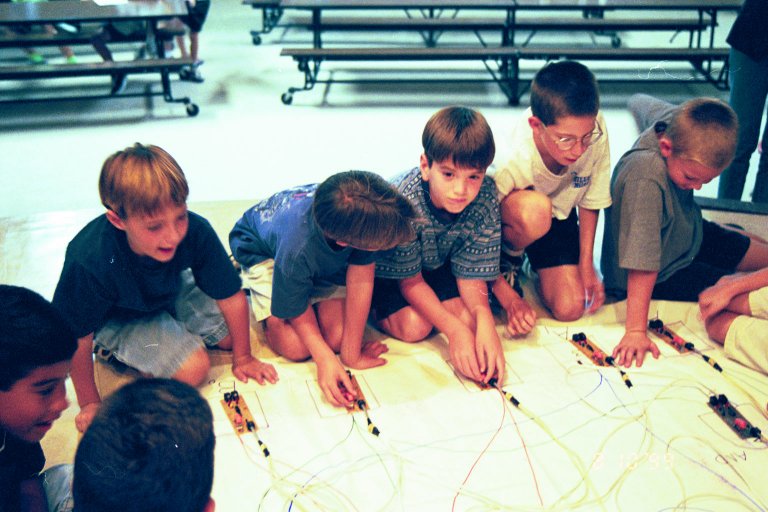
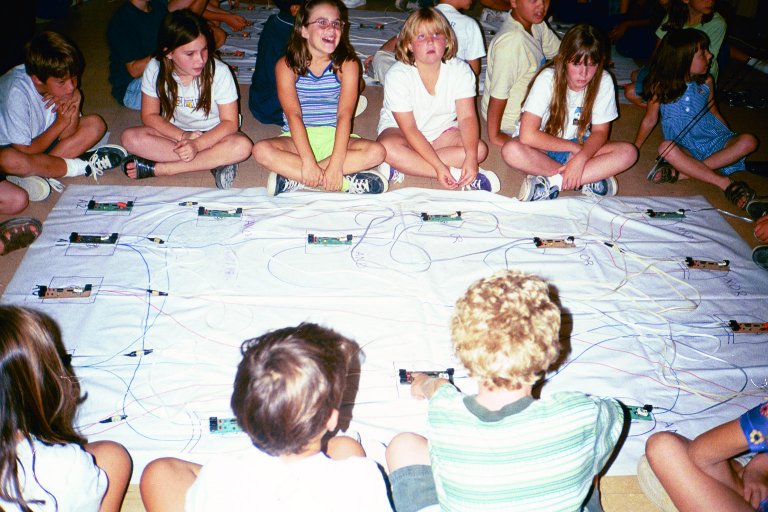
After the inputs have been set, each student does their job performing
the "AND", "OR", or "XOR" function according to the lights at their
own inputs. The results trickle through the network until all switches
have been set...
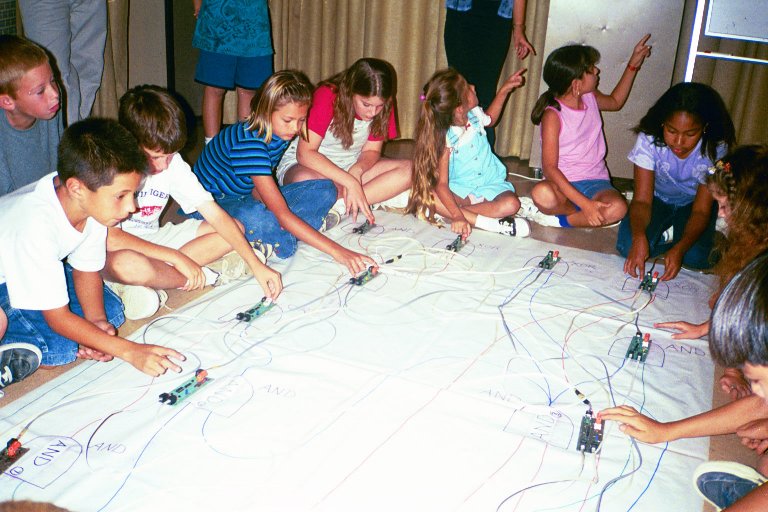
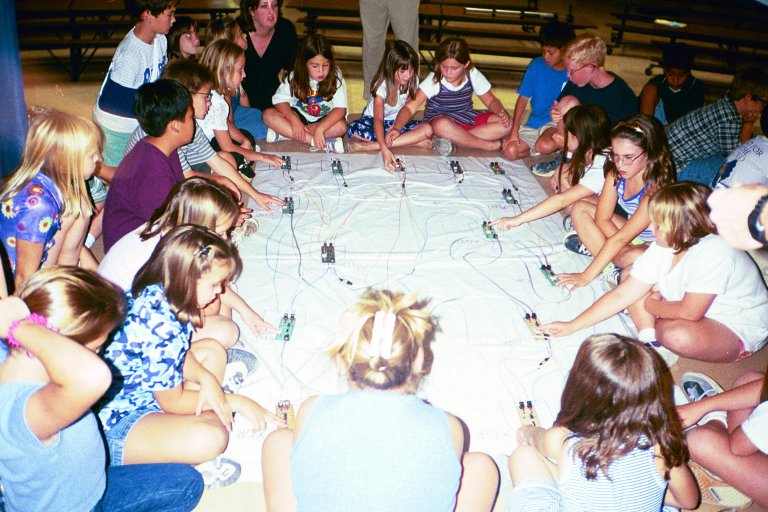
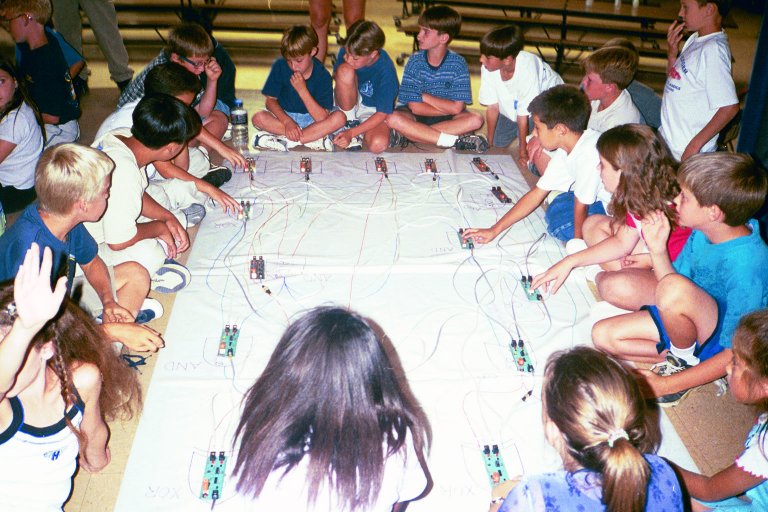
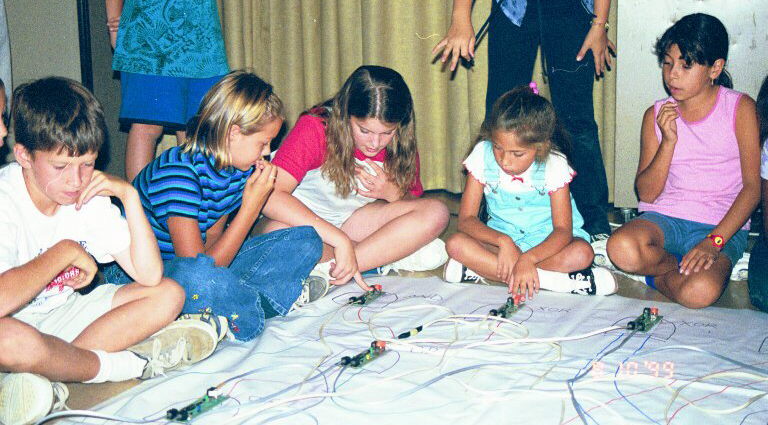
The students demonstrate teamwork and problem solving as they help
each other make the right decisions. In this game the team can only
win if each member does their job correctly - a good model for all
cooperative endeavors...
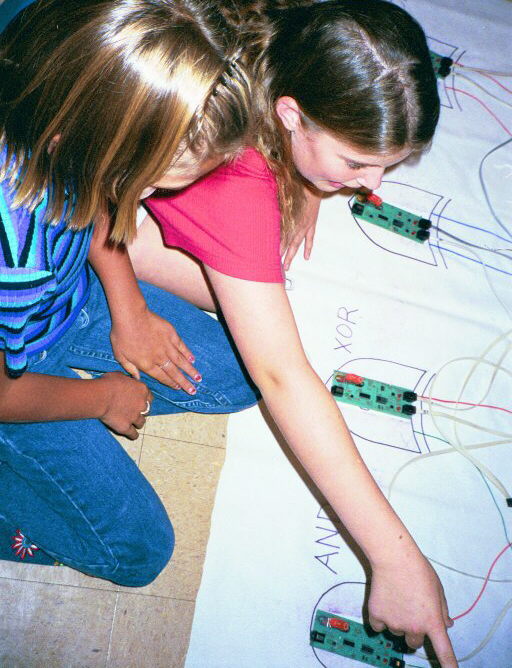
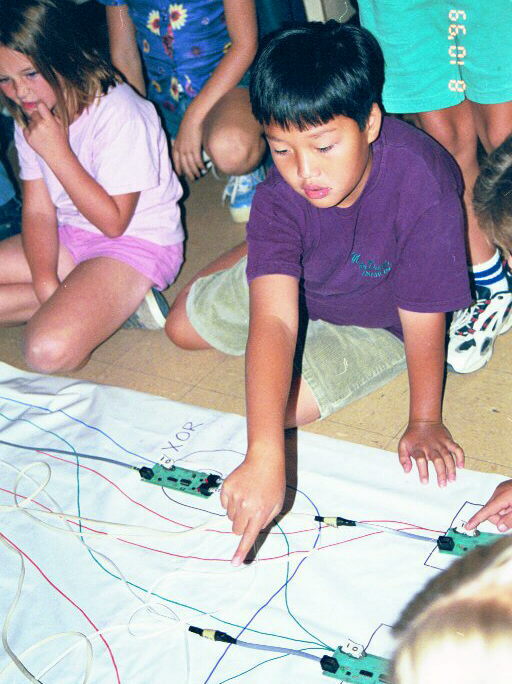
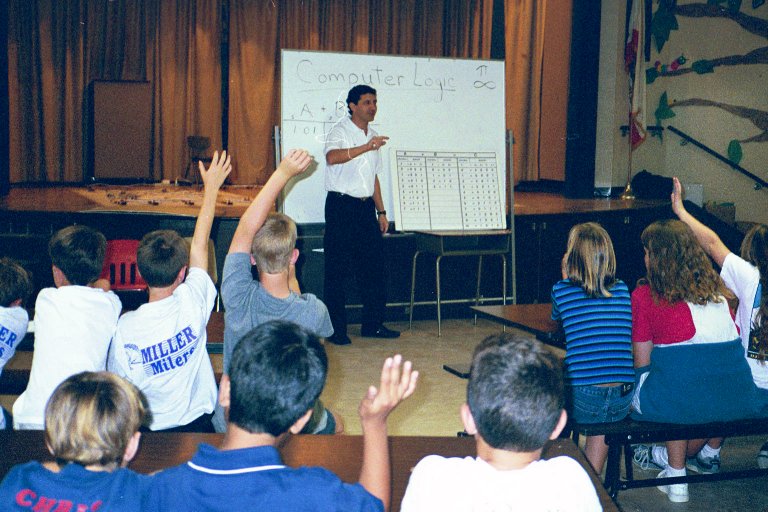
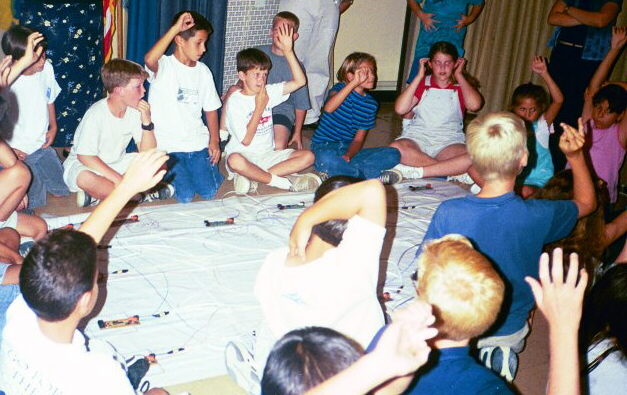
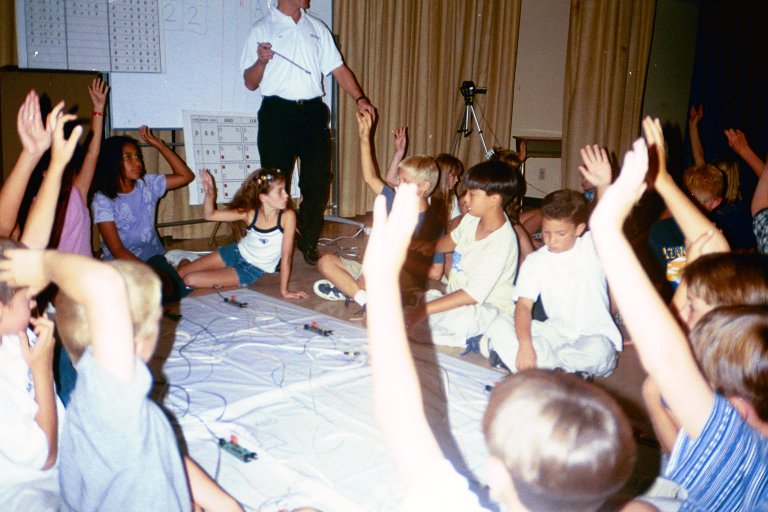
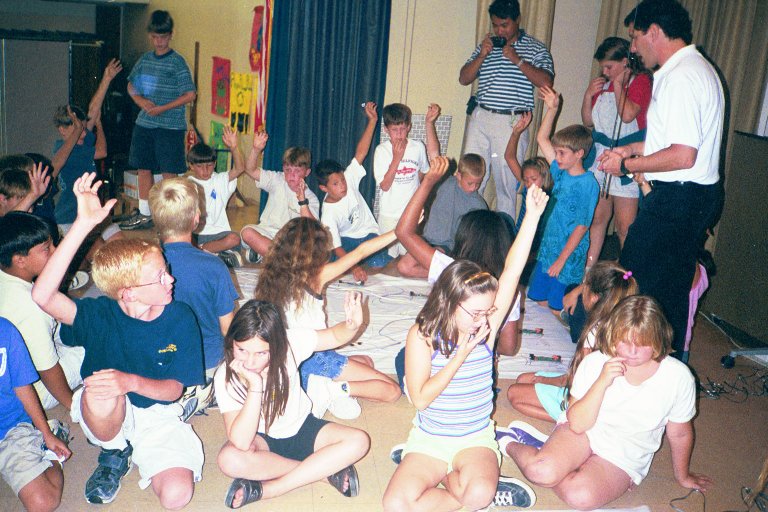
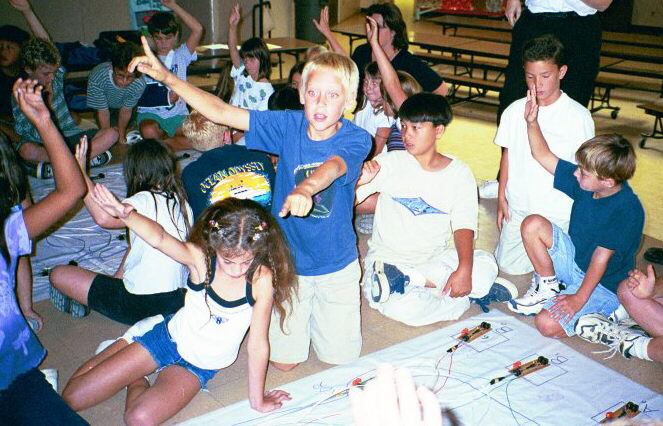
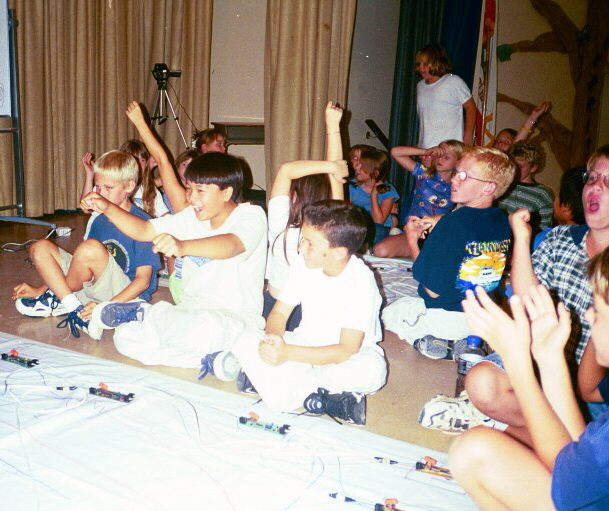
As each student completes their job they raise their hands until the
entire team is done. The first team done gets checked for correctness
while the other team continues working on the problem. The competition
can be intense...
The patented EduGatesTM system helps the instructor quickly
pinpoint any mistakes. The instructor halts the winning team and then
uses the patented automatic mode to find any errors and give feedback
to the students...
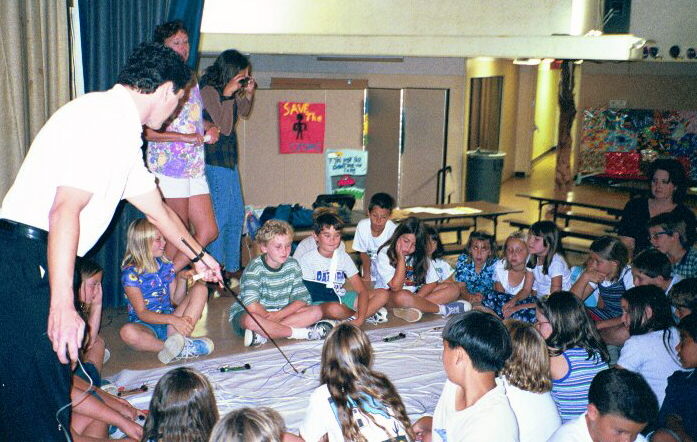
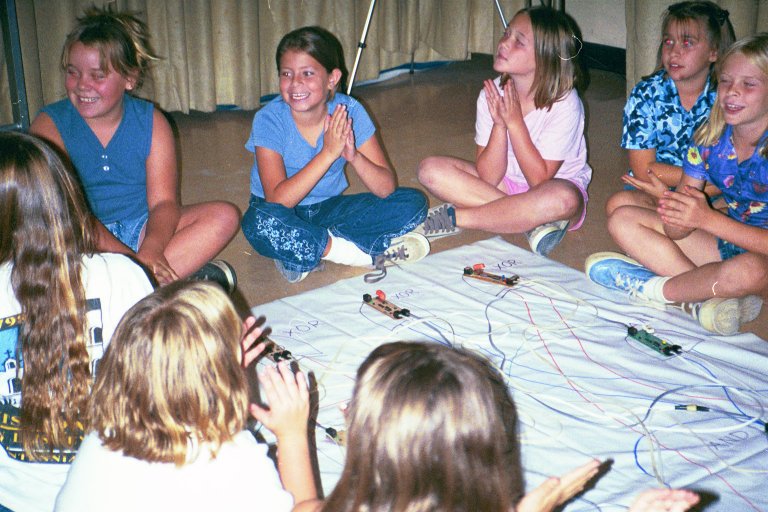
Students correct any mistakes and the competition continues until
both teams have gotten the correct answer. Of course, the first
team with the right answer gets the point ... and the celebration ...
A typical class will solve dozens of problems during the competition,
and the students will rotate jobs after each point to ensure they all
get to operate the binary inputs and each type of logic gate. The class
is wrapped up with a summary of the activities, and there's always time
for teacher consultation to lend continuity with other classroom
activities...